Radio

Saturday, 10 September 2016

The Sound Kitchen


  Susanne Mentzer,Roman gods, and Hong Kong’s political activists
Susanne Mentzer,Roman gods, and Hong Kong’s political activists
 
David Franklin/Getty Images/A Terrade

This week on The Sound Kitchen, you’ll hear the answer to the question about Juno and Jupiter. There’s “On This Day”, a musical hommage to the 9/11 terrorist attacks on the US, and of course, the quiz. Just click on the arrow in the photo and enjoy!

Hello everyone!
Welcome to The Sound Kitchen. You can catch the programme on-the-air every Saturday at 6:15, 7:15, 14:45 and 16:45 universal time. You’ll hear the winner’s names announced and the week’s quiz question, along with all the other ingredients you have grown accustomed to: your letters and essays, “On This Day”, quirky facts and news, interviews, and great music … so be sure and tune in every Saturday.
For our DX enthusiast friends: Our shortwave frequency is 13725 kHz on the 22m band, from 06.00 to 07.00 UT every day. We’ve had reception reports from Algeria, Australia, Bangladesh, Brazil, Canada, China, Columbia, Cuba, Denmark, Estonia, Finland, Germany, India, Indonesia, Italy, Japan, Kazakhstan, Latvia, Lithuania, the Netherlands, New Zealand, Nigeria, Pakistan, Peru, Poland, Russia, Sierra Leone, Sweden, the United Arab Emirates, the UK and the US, and although the frequency is “aimed” (or however that works) towards the African continent, give it a try. You never know … and be sure and send us your reception reports. Maybe we can get more time, which would be wonderful.
You can also hear our programs on WRMI (http://www.wrmi.net/) and WRN (http://www.wrn.org/listeners/). In Paris, you can hear us on World Radio Paris (http://www.worldradioparis.fr/) on DAB+. These broadcasters diffuse our programs out of the goodness of their hearts (and thank you thank you thank you WRMI, WRN, and World Radio Paris!), but unless you tell us how you heard us, we have no way of knowing … so do write and tell us how you listen to us.
This week’s quiz: On 9 July, I asked you a question about the planet Jupiter. NASA’s spaceship Juno had just arrived at Jupiter, after a five year flight!
Scientists believe Jupiter is probably the first planet formed after the sun – and hence holds the keys to understanding the origins of our solar system. The tests Juno will perform (how much water Jupiter contains and the possible presence of a rocky core) could reveal where in the solar system Jupiter was created, and provide clues to the early days of other planets. So it’s all about searching for some hints about our beginnings, how everything started.
Jupiter has four major moons. The man who discovered these moons realized they were moving in orbit around the planet – which was the first time objects were discovered to be orbiting around another planet. My questions to you were: who discovered Jupiter’s four major moons, in what year did he discover them, and what are the names of those moons?
The answer is: The man who discovered the moons is Galileo Galilei (1564 – 1642). Galileo was an Italian astronomer, physicist, engineer, philosopher, and mathematician. Galileo is often called the "father of observational astronomy", the "father of modern physics", the "father of scientific method", and the "father of science".
Galileo’s contributions to observational astronomy include the telescopic confirmation of the phases of Venus and the discovery of the four largest moons of Jupiter. He discovered the four moons in 1610, and published his findings in a book called The Starry Messenger.
Galileo believed that the Earth and the planets revolve around the sun. This was thought to be heretical by the Roman Catholic Church, and Galileo was brought to trial by the Inquisition in 1615. He was found "vehemently suspect of heresy" and spent the rest of his life under house arrest. At least they didn’t kill him – burning at the stake was the thing to do to heretics in those days.
The names of the moons are: Callisto, Ganymede, Io, Europa. Why? Jupiter is the Roman Sky and Thunder God, and the King of the Gods (his Greek name is Zeus). Jupiter was rather naughty, and often came down to earth, disguised, and seduced mortals. And who were some of those poor, unsuspecting mortals? You guessed it: Callisto, Ganymede, Io, and Europa.
So the correct answers are: Galileo. 1610. Callisto, Ganymede, Io, and Europa.
The winners are: Two RFI Listeners Club members: Mr Riaz Hussain from Chiniot District, Pakistan, and Father Steve Wara, who lives and serves at the Cistercian Abbey in Bamenda, Cameroon. There’s Abdol Bari from the RFI Fan Club in Naogaon, Bangladesh; Joseph Simushi from Nairobi, Kenya and Mrs C O Agboola from Ekiti State, Nigeria.
Congratulations winners!
This week’s question ... you'll have to listen to the show to participate. You have until 10 October to enter this week's quiz. The winners will be announced on the 15 October program. When you enter, be sure you send your postal address in with your answer, and if you have one, your RFI Listeners Club membership number.
Send your answers to:
english.service@rfi.fr
or
Susan Owensby
RFI – The Sound Kitchen
80, rue Camille Desmoulins
92130 Issy-les-Moulineaux
France
or
By text … You can also send your quiz answers to The Sound Kitchen mobile phone. Dial your country’s international access code, or “ + ”, then 33 6 31 12 96 82. Don’t forget to include your mailing address in your text – and if you have one, your RFI Listeners Club membership number.

Monday, 5 September 2016

KBS World Radio English Service

Hey all! Let's congratulate last week"s Y2C winner Dương Phạm. Please email us your mailing address to kpop@kbs.co.kr and be sure to include in the subject line that you are the Y2C winner for September 2nd, 2016.
This week's question...
Who do you spend the most amount of time with during the week? Ideally, our answers should be the names of the people we love most in the world. However, reality is not often the case. It may be a boss that you hate more than anyone else in the world. It could be a horrible professor or teacher you have. It could be co-workers that you enjoy spending time in and out of the office with. It could be a girlfriend/boyfriend or family members.
Let us know who you spend the most time with and maybe even send them a song request dedicated to them.
Have a great week everyone and hope Chuseok preparations are going well! :)
-Angie

Saturday, 3 September 2016

The Sound Kitchen

Brexit, tiny nation states and a co-chef

Brexit, tiny nation states and a co-chef
 
David Franklin/Getty Images/A Terrade

This week on The Sound Kitchen, you’ll hear the answer to the question about the Brexit vote. There’s a quick course on the fifth smallest country in the world, a surprise guest in the kitchen, music by request, and of course, the quiz. Just click on the arrow in the photo and enjoy!

Hello everyone!
Welcome to The Sound Kitchen. You can catch the programme on-the-air every Saturday at 6:15, 7:15, 14:45 and 16:45 universal time. You’ll hear the winner’s names announced and the week’s quiz question, along with all the other ingredients you have grown accustomed to: your letters and essays, “On This Day”, quirky facts and news, interviews, and great music … so be sure and tune in every Saturday.
For our DX enthusiast friends: Our shortwave frequency is 13725 kHz on the 22m band, from 06.00 to 07.00 UT every day. We’ve had reception reports from Algeria, Australia, Bangladesh, Brazil, Canada, China, Columbia, Cuba, Denmark, Estonia, Finland, Germany, India, Indonesia, Italy, Japan, Kazakhstan, Latvia, Lithuania, the Netherlands, New Zealand, Nigeria, Pakistan, Peru, Poland, Russia, Sierra Leone, Sweden, the United Arab Emirates, the UK and the US, and although the frequency is “aimed” (or however that works) towards the African continent, give it a try. You never know … and be sure and send us your reception reports. Maybe we can get more time, which would be wonderful.
You can also hear our programs on WRMI (http://www.wrmi.net/) and WRN (http://www.wrn.org/listeners/). In Paris, you can hear us on World Radio Paris (http://www.worldradioparis.fr/) on DAB+. These broadcasters diffuse our programs out of the goodness of their hearts (and thank you thank you thank you WRMI, WRN, and World Radio Paris!), but unless you tell us how you heard us, we have no way of knowing … so do write and tell us how you listen to us.
A hearty welcome to our new RFI clubs! There’s the RFI Listeners Club in
Muzaffargarh, Pakistan with Mubashir Hussain Asher as president; the RFI Fan Club in Nadia, W Bengal, India with Sunilbaran Das as president; the Kumi Central RFI Listeners Club in Kampala, Uganda with Charles Ongole John as president, and the RFI Listeners Club in Sheikhupura, Pakistan with Riaz Ahmed Khan as president.
Welcome, welcome, welcome! There are now 36 official RFI English listeners clubs!
There are 19 RFI English clubs in the midst of football tournaments. RFI’s Listener Relations department organized the tournaments because they knew the European Championship Games would have everyone football mad … and the matches played by the RFI English clubs continue!
The participating clubs are from all around the globe. In Africa, there’s the RFI Fan Club, Kisii, Kenya, Mogire Machuki, president; Kemogemba Club, Tarime, Tanzania, Ras Franz Manko Ngogo, president; The RFI Listeners Club Gambia, Brikama Town, The Gambia, Lamin Ceesay, president; RFI Ducor Sea Breeze Club of Liberia, Monrovia, Liberia, Hyrum Karyea Mennoh, president, and the RFI Club Ain Kechera, Ain Kechera, Algeria, Ferhat Bezazel, president.
In Pakistan, there’s the Pak France International Listeners Club, Sahiwal, Shahzad Shabbir, president and the RFI Fans Web Visitors Club in Khanpur, Amir Manzoor, president.
In India, there’s the International DX Radio Listeners Club, Murshidabad, Mr Najimuddin, president; RFI Natun Radio Listeners Club, Murshidabad, Kanchan KR Chatterjee, president; Golden DX Club, Murshidabad, Siddhartha Sarkar, president; RFI Listeners Club, Hyderabad / Miryalguda; Mrs P Sreelatha Reddy, president; Young Stars Radio Club, Sainikpuri / Secunderabad, Hari Madugula, president, and Metali Listeners Club, Murshidabad, Shivendu Paul, president.
In Bangladesh, there’s the Kaptai RFI Fan Club, Kaptai, Jahangir Alam Manto, president; RFI Club Dhaka, Dhaka, Wali Ahad, president; RFI Surfer’s Society Bangladesh, Dhaka, Ms Royeka Khatun, president, and the Friends Radio Club, Naogaon, Dewan Rafiqul Islam, president.
Both of our Cuban clubs are participating, too – the RFI Club Cuba, Ivan Carralero, president, and Cubans on the Radio, also in Holguin, Rommel Tamayo Gutiérrez, president.
The clubs will be sending in match results and (hopefully!) lots of photos for our Facebook pages. Stay tuned for the latest!
This week’s quiz: On 2 July, I asked you a question about the Brexit - Britain had just voted to leave the European Union.
Within three days of the vote, the “Leave” politicians started softening up on their promises of all the good that leaving the European Union would bring. The biggest promise the “Leavers” made during the campaign was about the sum of money which Britain pays to the EU each week, and which, instead, would be used to fund the UK’s National Health Service (NHS). Boris Johnson, Mr Leave himself, campaigned from a bus that had “We send the EU (here is the sum of money) each week, let’s fund our NHS instead” printed on it. Three days after their victory, Leave side politicians were saying they had only promised to “spend the lion’s share of that money” on the NHS.
My question to you was about the highly disputed sum of money which was one of the Leave side’s principal slogans. You were to write in with the amount of British pounds the Leave side said the UK pays to the EU every week, and which they wanted to use instead to fund the UK’s NHS.
The answer is: 350 million British pounds. That excludes money returned to Britain by the EU through rebates - money that Britain spent to subsidize its farmers and poorer regions, according to the Institute for Fiscal Studies. For example, Cornwall County has received close to 1 billion pounds in European Union assistance over the past 15 years, and was counting on around 500 million more by 2020. Cornwall County is demanding that the British government provide “investment equal to that provided by the E.U. programs.” And that’s just one county.
The winners are: Garba Bala from Kano State, Nigeria (he sent his answer via text to the Sound Kitchen mobile phone – see below for instructions on how you can do that, too); RFI Club member Kanybil Noon from Juba, South Sudan; Norman Cooper from Accra, Ghana; Wilfred W Asombang from Lusaka, Zambia, and Shoiab, a member of the RFI Fans Web Visitors Club in Khanpur, Pakistan.
Congratulations winners!
This week’s question ... you'll have to listen to the show to participate. You have until 3 October to enter this week's quiz. The winners will be announced on the 8 October program. When you enter, be sure you send your postal address in with your answer, and if you have one, your RFI Listeners Club membership number.
Send your answers to:
english.service@rfi.fr
or
Susan Owensby
RFI – The Sound Kitchen
80, rue Camille Desmoulins
92130 Issy-les-Moulineaux
France
or
By text … You can also send your quiz answers to The Sound Kitchen mobile phone. Dial your country’s international access code, or “ + ”, then 33 6 31 12 96 82. Don’t forget to include your mailing address in your text – and if you have one, your RFI Listeners Club membership number.

Friday, 2 September 2016

Winners Of Radio Prague's Monthly Quiz Augast 2016

The correct answer for August: Persian and Swahili


Winners:
Cammarata-Scalisi Francisco, Venezuela
Raghib Ali Jamali, India
Moreno D. Ang. María, Spain
Mademann Ulf, Germany
Kostomarova Nadezhda Grigorevna, Russia
Biot André, Belgium
 

Radio Prague's Monthly Quiz September 2016

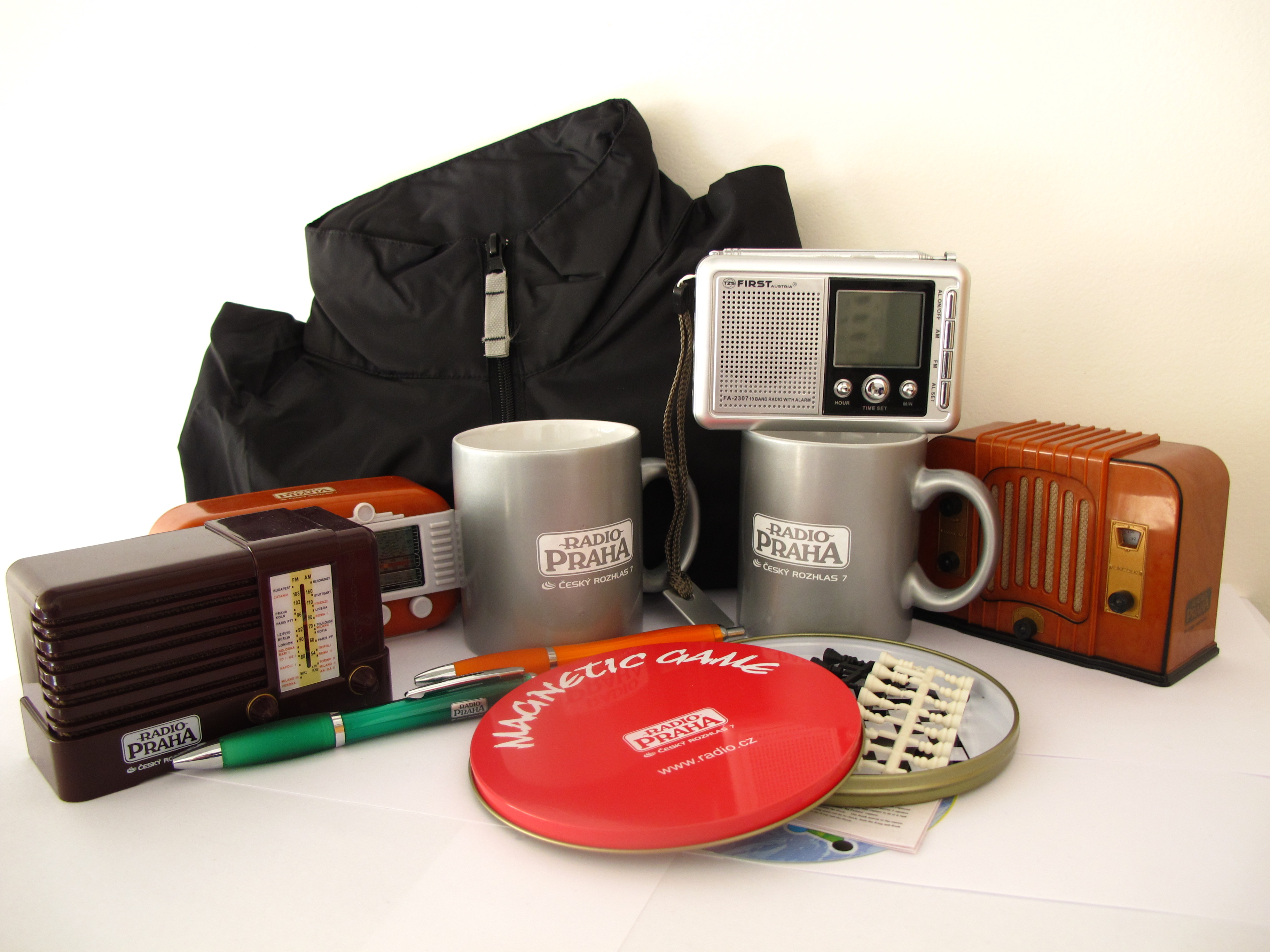
Test your knowledge of things Czech! On the first day of the month Radio Prague will announce the month’s quiz question. At the end of every month we will draw six winners from the correct answers received. Join our contest and win a Radio Prague prize! Answers should be sent to cr@radio.cz by the end of the month.

Question for September:
How many medals did the Czech Republic win at the 2016 Olympics in Rio de Janeiro?

ANSWER   10 Medals.